Wednesday, 23 April 2014

Lust in a Cold Climate

‘Doctor in Love’ (1960) is one of quite a lengthy series of films, obviously trying to emulate the success of the Carry ons. The formula is similar – a slightly saucy romp through a series of medical jokes and puns featuring a host of familiar faces – often recognisable from the Carry ons too. Regulars included James Robertson Justice as the top brass doctor, his most famous and enduring role.
JRJ by @aitchteee
http://www.etsy.com/shop/Tayloredartprints

Dirk Bogarde often took the lead role as the newly qualified doctor, but in ‘Doctor in Love’ he is replaced by the lesser known Michael Craig.  He is supported by Leslie Phillips, Liz Frazer and Joan Sims with a delightful cameo from Esma Cannon to up the Carry on stakes. Look out too for a very youthful Peter Sallis – yes he was young once!

The Doctor series are a lesson on how to piggy back on the success of another.  ‘Doctor in Love’ meanwhile features a small lesson on the history of medical research in the UK.  In order to buy themselves some time, Craig and Phillips’ characters (Burke and Hare) book themselves in at Foulness cold research centre.  This is where they bump into Frazer and Sims – also buying time after having lost their jobs as strippers.  The new intake is paired off and they are given strict instructions to stay isolated in their pairing while they are being exposed to cold viruses.  This seems to be an odd way to spend your free time, but it certainly isn’t pure fantasy.  

I was aware of the post-war common cold research establishment in Wiltshire.  A look at papers on the Wellcome Library website
(http://blog.wellcomelibrary.org/2013/09/fighting-the-cold-war-david-tyrrell-and-the-common-cold/and a Pathe newsreel from the 1950s (http://www.britishpathe.com/video/common-cold-research-unit-salisbury) confirmed that the Doctor storyline is surprisingly accurate for what could be viewed as a rather frivolous film.  Because taking part in the research involved food and shelter for a fortnight, with a small amount of pay into the bargain, it seems that there was no shortage of takers, even an over-subscription.  There was some marketing of the scheme as an unusual and cheap way to take a holiday and the Wellcome paper even refers to couples honeymooning there.  It is easy to see how people might have used it to plug the gap between jobs.  On arrival, people were split into pairs and were not allowed physical contact with anyone else for purposes of controlling the research.  There are however tales of patients taking a liking to each other and communicating by telephone or shouting!  Not quite as cheeky as Burke and Hare’s methods. The research establishment was housed in a former wartime Red Cross Hospital and the film also seems to have chosen a true to life location.  Those semi circular corrugated huts so commonly used in wartime camps are shown in the background.  So, full marks to ‘Doctor in Love’ for showing us this little bit of our medical history.  One that seems to have failed in its task.  Viewed from the present it does all seem to have been a tremendous waste of time and money – though obviously not for some of the individuals involved.  

Another surprisingly good word for ‘Doctor in Love’ is its treatment of the lady doctor, played by Virginia Maskell.  I have observed that in the earlier Carry on films, female medical staff are of two types: the doe-eyed siren with designs on a doctor, or the hatchet-faced harridan.* Here, Dr Barrington is none of these – she is intelligent, wise and stylish.  Those who would see her as anything other than a competent doctor are portrayed as buffoons.  An excellent piece of forward thinking for its time.


* In my essay Carry on NHS, available in my Kindle book ‘Matinee Musings’ - www.amazon.co.uk/Matinee-Musings-The-History-Usherette-ebook/dp/B00FJ4KY6C

Monday, 7 April 2014

Some Point Duty

I had a bit of a rummage around over the Christmas holidays.  I turned up a box of old postcards and photographs, including a transport themed collection which I had put together for a student project.  This included a photograph of me, aged 4, sat on the bonnet of my Dad’s Mark 1 Ford Escort; a photo of my Grandad on his motorbike and one of my Mum as a baby with her parents, stood in front of a 1950s car.  A nostalgia trip ensued as I imagined days when the roads were empty and vehicles were well made and didn’t look like clones of each other. That emptiness was the one thing that I really noticed in these photographs.  Grandad is riding his bike along a road in one of Sheffield’s busiest areas – Crookes. Today this road is a bus route and is plagued by parked cars (and students). In my photograph, there is not another vehicle in sight. My Dad’s car is parked outside his parents’ house on one of the city’s big post-war housing estates. These houses were built with no concept of future tenants owning multiple cars and many are without driveways.  This again is a maze of parked cars today – but in 1976 our car is practically the only one there.
Birley, Sheffield, 1976.  If I'd scratched that bonnet my life wouldn't have been worth living.

 Infused with these thoughts I settled down to watch ‘The Fast Lady’ (1962).  This wonderful piece of oily escapism will probably be familiar to everyone of my age and above, as I’m sure that it was a regular on BBC2’s Saturday Matinee in the 1970s and 80s.  If I were to list every well known name that appears in the film we’d be here all day.  The cast elicits regular gasps of familiarity and “Ooooh that’s him!” from the viewer.  But the main players are Stanley Baxter, Leslie Phillips, James Robertson Justice, Julie Christie and Kathleen Harrison. Baxter plays a hapless cyclist who eschews the bike for an iffy old sports car in order to win the heart of Christie, leading to 90 minutes of road based slapstick and farce.  This is a fine opportunity to view early 1960s Home Counties roads, which is very satisfying from a nostalgia point of view.  There are black and white striped sign posts, petrol stations, old traffic lights, policemen on point duty…not to mention Esma Cannon crossing the road, which is always worth a look. The depiction of a few bottle necks and snarl ups also shows that the imagined golden age of empty roads is not entirely correct.

But there were also other, less superficial, points of motoring history to be gleaned from the film.  At one point, following a series of mishaps, Baxter’s character (Murdoch) is arrested and he is suspected of being drunk.  This film was made before the days of the breathalyser and so it was interesting to see how drunkenness used to be confirmed.   Murdoch is taken to the station and a doctor is sent in.  Delightfully, the medic is played by Deryk Guyler, better known to all Sykes fans as Corky the policeman. The doctor sets Murdoch a test including mathematical sums and asking him what day and time it is.  I’m sure that this is not a wholly reliable method of finding out if someone is over the limit and breaking the law.  It also becomes apparent that the doctor has had a few, highlighting the fallibility of a test delivered by a human being rather than a machine.

There is a sort of follow up film to ‘The Fast Lady’, the 1963 offering called ‘Father Came Too.’  Again, Stanley Baxter stars, with James Robertson Justice as his new father in law.  Leslie Phillips also appears, this time as an estate agent with thespian tendencies.  Again, I remember this film so well from BBC2 Saturday afternoon matinees when I was growing up – it seemed to have a very regular airing.  Especially memorable are the team of builders that Baxter’s character (Munro) employs to renovate the ramshackle old cottage that he has bought from Phillips’ estate agent.  Led by Ronnie Barker and featuring Kenneth Cope, they portray the traditional British builder at his best, all tea breaks and teeth sucking.

But I bring this film up in the same blog as ‘The Fast Lady’ because there is also another interesting reference to roads which caught my attention.  When Munro and his new wife first view their cottage, they are told that a motorway is about to be built very close by – and this is a selling point. At the end of the film when the cottage burns down, its ok because the land is to be compulsory purchased at a good profit for the motorway to be driven right through the garden.  There is also another cottage for sale just around the corner. Everyone is happy with this outcome.  How different a view has been adopted since the 1980s, with every new road proposal being met with opposition from at least one group.  To have a motorway placed near to your home would also send its value spiralling downwards. And watch an episode of the BBC2 afternoon fodder ‘Escape to the Country’ and watch the aspirational househunters turn their noses up if even a hint of a motorway is detected in the vicinity (yet they always want to be within an hour of London, it makes me despair, it really does).

‘Father Came Too’ shows clearly how our attitudes to roads have changed. In those more innocent times, motorways were an exciting new concept.  They showed that we had joined the modern age, we were speeding forward down a fast super highway to a bright, modern future.  To have close access to this pulsing artery that would give life to the economy was to be “with it”. Those town centre traffic jams wouldn’t happen here.  A couple of decades down the line, the flow ground to a slow crawl and we had time to question and decide that we didn’t like them so much after all. All we are left with now is nostalgia for those times when it was all so new, when we were still working out what the car would mean to us all. Unfortunately, as ‘The Fast Lady’ shows, this was a time of drink driving and traffic jams too, so perhaps the nostalgia is a little misplaced.
On a bus route in Crookes, Sheffield in the 1950s...look no parked cars!

 As a postscript, I must pay tribute to the role of Pinewood Green in mid-century British cinema.  I recognised it instantly, as any ‘Carry On’ fan would, when it appears as the location of Baxter and Phillips’ lodgings in ‘The Fast Lady’. It was used in several Carry On films, in particular ‘Carry on Camping’. This must be one of the most filmed streets in British cinema.  Make it a national heritage site I say!


For more cinema based scribblings, please search Amazon for Sarah Miller Walters.

Friday, 28 March 2014

Intermission Part 4


The Diary of a Kind Hearted Man Killer now available as an Amazon Kindle book:
.
This diary came to life several years ago as a novel, one that I was not entirely happy with. But then I had a phase of reading wartime diaries, and I realised a means of bringing Louisa Bradshaw to life. She came back out of her drawer and together we concocted her diary. 

She was born from my love of those old Ealing comedy films of the 1940s and 1950s. Those who share my passion may recognise the title as a cross between 'Kind Hearts and Coronets' and 'The Ladykillers', two of my favourites. I wanted to emulate the black comedy of the genre in the form of a book. This is the reason for the high body count and the at times rather blase attitude towards it. The easily offended or incredulous may wish to give Louisa's story a miss. Part 1 of the story has been available as a blogspot serial. Parts 1 and 2 are contained in this kindle book.

Summary:
Louisa Bradshaw is a railwayman's daughter who chooses to serve the LMS railway when World War Two erupts. Her adventure leads her to tangle with the notorious Leon family, whose matriarch curses her when she rejects her son's advances. As the curse appears to come true, Louisa looks set to lead a lonely life.

Wednesday, 19 March 2014

Bomb Sights

I recently borrowed a book from the library, a great door-stop of a tome which details life in Britain in the 1980s. As the historian set the scene for the riots of 1981, he put forward a viewpoint, just in passing, which pulled me up short.  This was the assertion that at this point in time, inner cities had still not completely recovered and filled in its World War Two bomb sites.  And that in fact, the final rebuilding of a London bombsite did not take place until the end of the 1990s.  I have never given much thought to exactly how long it took our blitzed cities to recover.  But I probably held some sort of assumption that it was all done by the 1960s – that a need to construct thousands of new homes and offices had swallowed up the bombsites.  I feel sure that if I saw any piles of rubble in Sheffield’s east end during the 1980s, I never associated it with bombing – more an assumption that progress was sweeping out the old ways of working and living.  As slum clearances took hold and the traditional industries folded, demolition lines became blurred.

I carried out a web search to see if I could find any information which corroborated this assertion that it took more than 50 years to fill in the voids in London. What I did find was that this is a contentious issue.  There are a couple of quite heated debates that have taken place in forums.  One person agreed that the last bombsite was at Ludgate Circus and that this was finally developed at the close of the 20th century.  Others claim that they know of bombsites that still have not been fully redeveloped – gaps in streets that were never filled in, or playgrounds where fragments of bombed houses can still be seen.

Whatever the answer, I still found it amazing that it took so long to clear up the damage and replace all the lost buildings.  But this perhaps proves that I was not there to witness the sheer scale of the destruction.  Fortunately, just a couple of weeks later, a film came along to help bring this home.  The classic Ealing film ‘Hue and Cry’ was filmed in central London in 1946.  It makes very good use of the bombsites to create an atmosphere of seedy shabbiness, where criminals can take advantage and children become worldliwise.  The devastation cannot be escaped, such is its scale.  The scenes towards the end of the film are particularly good, where a gang of sleuthing boys descend on a gang of crooks. This large scale fight takes place by the Thames atop piles of rubble and inside the skeletons of buildings.  It looks like there is not a thing in tact along that stretch of the water.

A scene of houses being built is shown and it is obvious that the priority had to be housebuilding. It was in the politicians’ interests to see to it that their voters had comfortable homes first and foremost. When you give the matter due consideration, not all sites would have been suitable for residential development.  With all the resources ploughed into homes, of course many sites were going to be left longer than others before reconstruction could begin. Especially if they were publicly owned and in need of financial input from the local authority. ‘Hue and Cry’ certainly helped me to gain some perspective on post war redevelopment.

The film is also worth watching for the appearance of Alastair Sim at his brilliant best. There is also some novelty to be found in the depiction of several young boys who are obviously fresh out of school and in work.  This phenomenon is unknown to modern society.  I watched with interest the jobs that they happily kept themselves employed in, including market porter, ice cream bike operative and errand boy for the BBC.  1946 London was truly a world away, one where even the scars have now finally healed over.

Alastair Sim by @aitchteee


For a look at how World War Two changed our attitudes to the spirit world, see ‘Films With Spirit’ – part 5 of ‘Matinee Musings’ by Sarah Miller Walters, available as an Amazon Kindle book


Saturday, 1 March 2014

Stop Wineing

‘Carry on Abroad (1972) takes full advantage of the package holiday phenomenon of the 1970s.  Suddenly, the British found themselves in the position of being able to head for the sun for their summer breaks.  Package holidays to Spain and other Mediterranean countries boomed.  Resorts, keen to cash in on the boom times, sometimes couldn’t quite keep up with demand.  I vaguely remember the consumer programme reports of the late 1970s/early 1980s where people wrote in to complain about tour operators that had sold them two weeks on a building site.  Rich pickings indeed for Talbot Rothwell.  ‘Carry On Abroad’ exaggerates the problems encountered by most, but as with all comedy it is based on familiarity and there are elements of truth in the unfinished hotel in the middle of nowhere, run by amateurs.

A strong theme running through the film, and a looming sign of things to come is the conspicuous consumption of alcohol.  The character of Eustace Tuttle, played by Charles Hawtrey (though mainly being himself rather than acting, by all accounts) is rather symbolic.  A Mummy’s boy, whose maternal bondage seems to revolve entirely around his bowel movements, he uses his holiday to temporarily break free.  To him, to break free entails indulging in copious amounts of drink.  He spends the entire film on the sauce.  Meanwhile, Mrs Blunt, played by June Whitfield, is a hugely uptight woman.  She is the butt of that famous line of Sid’s, where, after telling him that she has tried every vice once and didn’t like it, he can only assume that she has just the one child.  Of course, all it takes is a bottle of champagne to loosen her up and become open to amorous advances.  Finally, at the end of the film, all of the characters bond over a huge bowl of punch.

If we go on the older black and white British films, it used to be the case that our pubs kept to strict opening hours, that men drunk only pints of flat beer or traditional spirits, while any woman unladylike enough to frequent a public house drunk a port and lemon, or possibly a gin. Certainly drunkenness existed – but was it to the same extent that we have now?  These new trips abroad broadened our horizons where drinking was concerned and holidaymakers partook specifically to enhance the relaxation experience.  Trips began to be made across the Channel specifically to drink, and we imported these new habits in an attempt to recapture the holiday spirit, to break up the horror of returning to the daily grind.


Unfortunately, like Eustace, we do seem to have taken it too far, as scenes on a Saturday night up and down the land attest.  And I do believe that we have rather made a name for ourselves on the continent as a nation unable to hold their drink.  As ‘Carry On Abroad’ shows, we do it to escape and to loosen ourselves from the bonds of our natural national reserve.  It is time that we grew up now, and found some confidence elsewhere.  

My first holiday abroad in Tenerife, 1982.  I wasn't on the booze though....

Friday, 14 February 2014

What Maggie May Tell

‘The Maggie’ (1954) is a well loved Ealing film, a gentle comedy set on the waterways around the west coast of Scotland.  The Maggie of the film title is a battered old puffer boat, whose wily captain returns to Glasgow in search of a cargo.  By being in the right place at the right time, and with a little stretching of the truth, Captain MacTaggart makes a scoop.  He secures the cargo of a wealthy American transport tycoon called Calvin D Marshall.  His job is to take several household items to an island.  The job is given to Captain MacTaggart by Marshall’s assistant, the very English beaurocrat Mr Pusey who is too busy to make the proper checks.  The Captain being a law unto himself, the journey is punctuated by booze ups and poaching, and the journey promises to be a long one.  Marshall, finding out about his cargo, firstly tries to send his assistant to sort things out, but then ends up joining the crew to supervise matters.  All sorts of little adventures ensue which are delightfully entertaining – perfect feelgood stuff for a wet weekend afternoon.

As I have mentioned before, most recently in my post about ‘The Man in the White Suit’, I often detect a hint of political commentary in the Ealing comedies.  In ‘The Maggie’ I think that the key to the commentary lies in the name of the wealthy American – Marshall. At this point in the mid 1950s, Marshall Aid would still have been a relevant topic. This pumping of United States wealth into Europe aimed to put us back on our feet economically – the ultimate capitalist plan to prevent communist revolution or further war.  Britain received a hefty share of Marshall Aid, but as we can still easily imagine today, people must have had their own ideas on how it should have been spent.  I think that the naming of a rich American character as Marshall is too much of a coincidence for it not to have been deliberate.

The big mistake that Donovan Marshall makes is to leave the arrangements for the transportation of his goods to an Englishman in a bowler hat.  It is he that messes up what should be a simple task of distributing the goods to their intended destination. He fails to make the proper checks and is panicked into giving the shipping contract to the wrong sort of people.  Does this translate into dissatisfaction with how the Westminster government spent the Marshall Aid? There has certainly been discussion amongst history commentators on this issue.  Germany invested their aid into manufacturing and soon outstripped the UK in this respect.  Meanwhile, it seems that the UK chose to spend much of its aid money on the welfare state and clinging to the wreckage of colonialism.  Is this the reason why we have bowler-hatted and suited Mr Pusey misdirecting Mr Marshall’s riches?  I do believe that someone involved with the making of ‘The Maggie’ was bemoaning a perceived condemnation to a second rate future because of mishandled aid money.

One scene in the film which really caught my eye was close to the end, when Mr Marshall’s cargo is jettisoned in order to save The Maggie from sinking. There is a lingering shot of a crate sinking to the sea bed. A drop in the ocean is the phrase that came to mind.  An opinion that we just didn’t receive enough?

At the close of the film, Marshall lets MacTaggart get away with it all and keep his puffer, sacrificing his expensive cargo in the process.  I wondered if this was a criticism of the US too, in being too soft with Britain.  Is this a suggestion that they let sentimentality get in the way of making us treat capitalism with the due reverence?


None of this proves anything; it is all my own conjecture.  But I find the possibility that such a gentle film as The Maggie could be making such a political comment fascinating.  This is a subtlety which is definitely lacking in modern media.

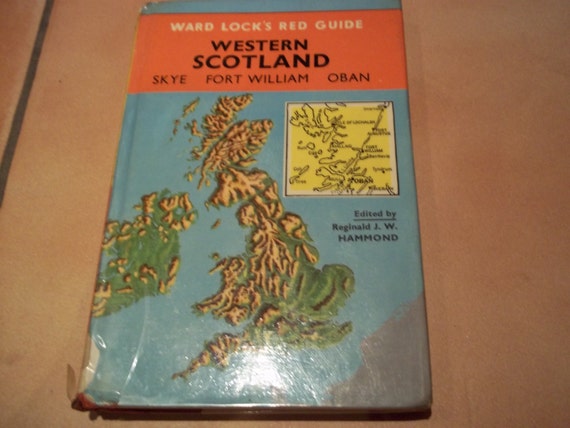
http://www.etsy.com/uk/listing/178258325/vintage-red-guide-to-western-scotland?ref=shop_home_active_5

Wednesday, 5 February 2014

Difficult Truth Girl

‘Good Time Girl’ (1948) is quite the hidden gem.  I unearthed it on You Tube, and I’m sure that I have neither seen nor heard of it previously.  This is odd, because it has a stellar cast.  Jean Kent has the starring role and she is supported by Herbert Lom, Dennis Price, Flora Robson, Diana Dors and Jill Balcon.  As you would imagine with a cast with this kind of quality, the film is no turkey – it is compelling and atmospheric.  So why is it not a household name?


I wonder if this is because the film was too radical in its outlook for the times.  Did it have a subdued reception in 1948 because, in general, people found its message difficult to deal with?  This in turn might have led to it becoming quickly buried and forgotten.


The story focuses on Kent’s character, a girl of sixteen called Gwen.  We are invited to watch her spiral down into a life of crime and eventual imprisonment by the haughty and moralising magistrate (Robson).  We first find her living at home with her parents and five siblings, where the father drinks away what little he earns and regularly beats his entire family.  After losing her job in a pawnbrokers, Gwen is on the receiving end of what she decides will be her final belting and leaves home.  She then becomes prey to a series of ne’er do well men and she slides down towards alcoholism, manslaughter and theft. Her crimes are undoubtedly heinous.  There is no tiptoeing around the fact that she is in the wrong.  Yet we sympathise because we are shown that she was born to be a victim.  The fault is not all hers, society has a role to play – society turns a blind eye when fathers beat their children senseless; society allows adult men to take advantage of teenage girls with a nudge and a wink.  And whatsmore, society allows people to sit in judgement of girls like Gwen when they have absolutely no insight into poverty and abuse.  They only see the crime and seem to have no concept that the criminal can also be a victim.  All it would have taken to prevent Gwen’s crimes would have been a safe home and a job.  But she was condemned the minute that she tried to fight back against her lot in life.  She didn’t know her place.  Uncomfortable, isn’t it?  Because this isn’t history.  At least in the modern world systematic abuse makes newspaper headlines and launches official enquiries.  It’s one baby step in the right direction but look how long even that has taken us. 


The modern audience of ‘Good Time Girl’ are not unfamiliar with the concept of criminal as victim.  Most of us have now at least learned that there is more than one aspect to any story.  We can watch this film and accept what it tells us about our faults.  But its burial over time perhaps shows that post-war society was still inclined to accept what was dictated to them by a rigid hierarchy.  People were not expected to question, and in fact may have viewed this film very differently to me or to any of us now.  Perhaps it should be re-released or re-made because this story is still, unfortunately, very relevant.