Friday, 14 February 2014

What Maggie May Tell

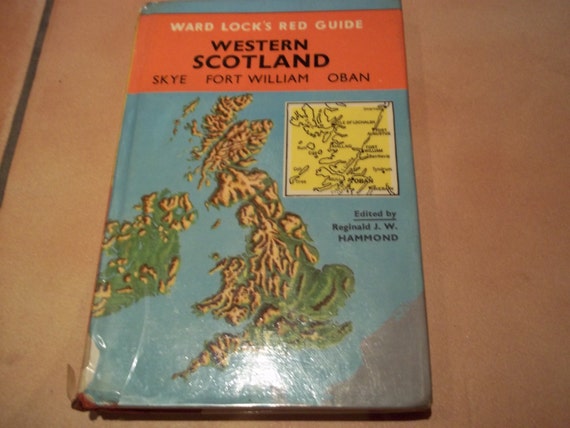
‘The Maggie’ (1954) is a well loved Ealing film, a gentle comedy set on the waterways around the west coast of Scotland.  The Maggie of the film title is a battered old puffer boat, whose wily captain returns to Glasgow in search of a cargo.  By being in the right place at the right time, and with a little stretching of the truth, Captain MacTaggart makes a scoop.  He secures the cargo of a wealthy American transport tycoon called Calvin D Marshall.  His job is to take several household items to an island.  The job is given to Captain MacTaggart by Marshall’s assistant, the very English beaurocrat Mr Pusey who is too busy to make the proper checks.  The Captain being a law unto himself, the journey is punctuated by booze ups and poaching, and the journey promises to be a long one.  Marshall, finding out about his cargo, firstly tries to send his assistant to sort things out, but then ends up joining the crew to supervise matters.  All sorts of little adventures ensue which are delightfully entertaining – perfect feelgood stuff for a wet weekend afternoon.

As I have mentioned before, most recently in my post about ‘The Man in the White Suit’, I often detect a hint of political commentary in the Ealing comedies.  In ‘The Maggie’ I think that the key to the commentary lies in the name of the wealthy American – Marshall. At this point in the mid 1950s, Marshall Aid would still have been a relevant topic. This pumping of United States wealth into Europe aimed to put us back on our feet economically – the ultimate capitalist plan to prevent communist revolution or further war.  Britain received a hefty share of Marshall Aid, but as we can still easily imagine today, people must have had their own ideas on how it should have been spent.  I think that the naming of a rich American character as Marshall is too much of a coincidence for it not to have been deliberate.

The big mistake that Donovan Marshall makes is to leave the arrangements for the transportation of his goods to an Englishman in a bowler hat.  It is he that messes up what should be a simple task of distributing the goods to their intended destination. He fails to make the proper checks and is panicked into giving the shipping contract to the wrong sort of people.  Does this translate into dissatisfaction with how the Westminster government spent the Marshall Aid? There has certainly been discussion amongst history commentators on this issue.  Germany invested their aid into manufacturing and soon outstripped the UK in this respect.  Meanwhile, it seems that the UK chose to spend much of its aid money on the welfare state and clinging to the wreckage of colonialism.  Is this the reason why we have bowler-hatted and suited Mr Pusey misdirecting Mr Marshall’s riches?  I do believe that someone involved with the making of ‘The Maggie’ was bemoaning a perceived condemnation to a second rate future because of mishandled aid money.

One scene in the film which really caught my eye was close to the end, when Mr Marshall’s cargo is jettisoned in order to save The Maggie from sinking. There is a lingering shot of a crate sinking to the sea bed. A drop in the ocean is the phrase that came to mind.  An opinion that we just didn’t receive enough?

At the close of the film, Marshall lets MacTaggart get away with it all and keep his puffer, sacrificing his expensive cargo in the process.  I wondered if this was a criticism of the US too, in being too soft with Britain.  Is this a suggestion that they let sentimentality get in the way of making us treat capitalism with the due reverence?


None of this proves anything; it is all my own conjecture.  But I find the possibility that such a gentle film as The Maggie could be making such a political comment fascinating.  This is a subtlety which is definitely lacking in modern media.
http://www.etsy.com/uk/listing/178258325/vintage-red-guide-to-western-scotland?ref=shop_home_active_5

Wednesday, 5 February 2014

Difficult Truth Girl

‘Good Time Girl’ (1948) is quite the hidden gem.  I unearthed it on You Tube, and I’m sure that I have neither seen nor heard of it previously.  This is odd, because it has a stellar cast.  Jean Kent has the starring role and she is supported by Herbert Lom, Dennis Price, Flora Robson, Diana Dors and Jill Balcon.  As you would imagine with a cast with this kind of quality, the film is no turkey – it is compelling and atmospheric.  So why is it not a household name?


I wonder if this is because the film was too radical in its outlook for the times.  Did it have a subdued reception in 1948 because, in general, people found its message difficult to deal with?  This in turn might have led to it becoming quickly buried and forgotten.


The story focuses on Kent’s character, a girl of sixteen called Gwen.  We are invited to watch her spiral down into a life of crime and eventual imprisonment by the haughty and moralising magistrate (Robson).  We first find her living at home with her parents and five siblings, where the father drinks away what little he earns and regularly beats his entire family.  After losing her job in a pawnbrokers, Gwen is on the receiving end of what she decides will be her final belting and leaves home.  She then becomes prey to a series of ne’er do well men and she slides down towards alcoholism, manslaughter and theft. Her crimes are undoubtedly heinous.  There is no tiptoeing around the fact that she is in the wrong.  Yet we sympathise because we are shown that she was born to be a victim.  The fault is not all hers, society has a role to play – society turns a blind eye when fathers beat their children senseless; society allows adult men to take advantage of teenage girls with a nudge and a wink.  And whatsmore, society allows people to sit in judgement of girls like Gwen when they have absolutely no insight into poverty and abuse.  They only see the crime and seem to have no concept that the criminal can also be a victim.  All it would have taken to prevent Gwen’s crimes would have been a safe home and a job.  But she was condemned the minute that she tried to fight back against her lot in life.  She didn’t know her place.  Uncomfortable, isn’t it?  Because this isn’t history.  At least in the modern world systematic abuse makes newspaper headlines and launches official enquiries.  It’s one baby step in the right direction but look how long even that has taken us. 


The modern audience of ‘Good Time Girl’ are not unfamiliar with the concept of criminal as victim.  Most of us have now at least learned that there is more than one aspect to any story.  We can watch this film and accept what it tells us about our faults.  But its burial over time perhaps shows that post-war society was still inclined to accept what was dictated to them by a rigid hierarchy.  People were not expected to question, and in fact may have viewed this film very differently to me or to any of us now.  Perhaps it should be re-released or re-made because this story is still, unfortunately, very relevant.

Friday, 24 January 2014

Dark Days

‘The Stars Look Down’ (1940) stars Michael Redgrave and is set in a North Eastern mining town in the 1930s.  Above all else, it demonstrated to me the unremitting misery of the 19th and 20th Century coal community.  This is of particular personal interest to me.  Although I grew up in Sheffield, with steel workers as my immediate antecedents, in 1999 I moved to a traditional coal mining town.  My work put me in touch with many old miners and I found myself working in communities where mining was gone but by no means forgotten.  I have seen how the memory of dark times has been passed on down the generations, so that even decades old grievances can be brought into play without either side thinking it strange.  This is history that remains difficult to shake off.  I found it bemusing at first.

‘The Stars Look Down’ portrays a community that is downtrodden by its livelihood.  When the workers try and make a stand against the greed of the pit owners, the mine closes and they are left with nothing.  There is no alternative work.  The whole town is dragged down as people can’t afford to buy from the shopkeepers and small tradesmen.  With nothing else to kick against, they turn in on themselves.  Those who do try and find a way out – such as Redgrave’s character (Davey Fenwick) are viewed with amusement or disdain.  The will to break free has been forced out of most, they continue along a single track like a blinkered pit pony.
Redgrave by @aitchteee

 When the pit is open and working, danger is a constant presence.  The film makes it clear that many were of the opinion that mine owners put profit before lives.  It puts across a firm opinion that only public ownership will make this a safer working environment.  Daily threat of death is accepted as a hazard of earning enough to stay alive – a paradox unacceptable in the modern world. The storyline ends tragically.  True to life for so many families.  Also true to life perhaps is Davey Fenwick’s eventual return to his home village.  Even those that escaped found the world outside just too different to cope with – such was the unique character of a pit village. 

Nationalisation was achieved but it didn’t stop the accidents or the strikes.  What really changed things was the welfare state, which meant that loss of work didn’t lead to cruelly means- tested grinding poverty.  Although the towns and villages where I live and work are still struggling through the closures of two decades ago with some of the highest unemployment rates in the country. This film helped me to see why I shouldn’t have been so bemused when I moved here. Perhaps if I had seen this first I would have been more prepared. 


Since moving here, I have traced my family tree and found that I have some north eastern mining blood. Cornforth and Ferryhill are my ancestral homes, and were probably not that different to the village portrayed in the film, even back in the 19th century.  I am proud to have this blood – but glad that Great Grandma decided to seek her fortune in the big city and took her hook to Sheffield.  And now I realise just how much I should admire her for breaking free from that setting.  Strange to imagine that I did actually meet her, that this history was just in my grasp as our lives briefly overlapped. Unfortunately, she was so old that she scared me! But it just shows that these terrible lives were not so long ago in the grand scheme of things, which should be much to our shame.


Sarah's Amazon Page

Thursday, 2 January 2014

Appointment With Luck

‘Appointment in London’ (1953) stars Dirk Bogarde as a Wing Commander at a Lincolnshire bomber base.  The action takes place in the summer of 1943.  As you would imagine for a British film of this period, there is a range of familiar looking faces in supporting roles.  Quite often, you can’t put a name to the face, they are just part of your own film landscape.  In this film, one character had an extremely familiar voice, although his face was hitherto unknown to me.  The voice belonged to an Australian character, played by one Bill Kerr.  Any Hancock’s Half Hour-ites out there will know Bill’s Antipodean tones – I must have heard him hundreds of times from the radio shows.  I found it quite fascinating to actually see him, though I kept expecting him to call other characters “Tub”!

This is a serious film, focussing on a group of men who never knew if that day would be their last.  I was half expecting a squadron of stiff upper lips and blithe heroism.  I was pleasantly surprised by the very human portrayal that I saw on the screen.  It gave me the overall impression that these men were obsessed with the concepts of luck and superstition.  At the beginning of the film, Bogarde’s character (Mason) is returning from his 87th flying mission over enemy territory.  The storyline makes clear just how lucky he is to have reached this point.  In fact he is an anomaly in the statistics.  Mason’s luck weighs heavily on his shoulders and colleagues worry for his health.  There is no logical reason for his survival, it is pure luck and he doesn’t know how to prolong it or when it will run out.  Meanwhile, other characters have their lucky charms, and talk of jinxes is common.  There is even the hint of superstition around the presence of wives and girlfriends.

Bogarde by @aitchteee 
This film demonstrates how important these concepts are to the human when they face an uncertain, pressured existence.  It shows how our irrational beliefs in superstitions and charms stems from a time when life was much less safe than it is today.  It also demonstrates, should we ever forget, just how short a lifespan World War Two aircrews faced.

We should treasure films such as ‘Appointment in London’ as part of our national war archive.  Another thought that this film led me to is that this kind of warfare was quite unique and its existence short-lived.  Aerial warfare was in its infancy in World War One, it was perfected in the Spanish Civil War and used most intensely in World War Two.  But by the end of this conflict, the pilot-less aerial bombardment weapon had been developed.  It was then not the nightly air-raids, but the constant sudden appearance of a V rocket that was to be feared.  So, this window in the lives of bomber crews needs to be kept, as our understanding of their existence and psychology recedes into a past that we can barely comprehend anymore.


To see how this film inspired one of my short stories, see my wordpress blog post: http://sarahmillerwalters.wordpress.com/2013/11/20/keep-writing/

Thursday, 12 December 2013

Naval Gazing

Having attempted to trace my family tree, I can confidently assert that I have sea-salt in my blood.  I am descended from a long line of Cornish/Devonian sailors.  We even have a seafaring claim to fame as Jack Crawford – “Hero of the Battle of Camperdown” is apparently a great-times-several uncle.  He even has his own statue in Sunderland and a Wikipedia page – and having read this and how he sold his medal to buy booze I am quite convinced and ready to accept him as one of my own.  More recently, my great uncle was lost on the HMS Prince of Wales, sunk off Singapore in the middle of World War Two.  His memory has resonated down three generations.

But I know that I am not unusual in this – despite my having grown up nowhere near the coast.  We are a small group of islands so it is only natural that many of us have taken to the seas over the centuries.  There has also been a lot of prestige attached to the Royal Navy, which must have made it an attractive proposition to a young man with not much in the way of an interesting future before him, especially in the days before there were planes to fly.  The navy has also been an attractive subject to film-makers, and the service’s Second World War exploits have been well documented.

I recently stumbled across a 1939 film called ‘Sons of the Sea’.  Filmed in lavish colour, this is very obviously a recruitment drive for the impending war.  The storyline mostly takes place at Dartmouth Naval College, and I would guess that permission to film there meant that the film did have official blessing.  Scenes of parades at the college and the beautiful local scenery are deliberately placed to make the hardest of British hearts swell with pride.  There’s a lot here for the vintage transport enthusiast, including some delicious chocolate and cream GWR action.  But there are not that many boats – surprising for a film about navy personnel.  This could be because the film is mainly about the officer class and it is mainly parades and desks.  If this film was an officially blessed recruitment drive, it appears that the navy at this point in time were much more interested in attracting officers than ratings.  They knew that conscription would bring them enough of the general cannon fodder that they needed, but they worked to attract the cream of the middle classes to come and give the orders.

If there is one contemporary navy-themed war film that stands out for me, it is ‘In Which We Serve’. This 1942 film is, in the film’s own words, the story of a ship.  It follows the adventures of the fictional HMS Torrin and its crew – going right across the board from Noel Coward’s upper class captain to John Mills’ salt of the earth cockney.  This too had the blessing of the Ministry of Information, and of course it had to have some sort of feelgood and morale boosting factor about it.  But it does not shy away from reality.  The ship is torpedoed and sailors lose their lives, perhaps illustrating that British audiences wouldn’t have accepted a load of old flannel and the powers that be knew that.   This is good news for us, because we do see some genuine concerns from the time.  I was particularly interested to see the recognition of how modern warfare made life even more difficult for servicemen than it had ever been before.  The bombing of cities by the Luftwaffe meant that for the first time, those serving on board ships had as much cause to worry about their loved ones as vice-versa.  Plymouth, where many naval wives and families lived, was particularly targeted by bombers.  The Chief Petty Officer’s loss of his wife and mother-in-law during a raid in the film was true to life.  Miraculously, John Mills’ wife and unborn child survive, despite being in the same house.  This is where the censors must have stepped in – because countless children and babies were killed in the Plymouth raids.  The death of a pregnant woman must have been deemed too much for contemporary audiences to take, showing us where the morale line was drawn.

Looking at these two films together provides some perspective on how attitudes changed in World War Two.  As Britain approached war, ordinary sailors were not deemed interesting enough to star in a film or worth a lot of effort to recruit.  By 1942 their lives take centre stage in a screenplay written by upper-class aspirational Noel Coward.  At last the efforts of the masses are being recognised, I wonder if this was a sea-change for film? 

But let’s not forget our naval heroes, as depicted in this sort of film. Not those heroes with statues or pubs named after them.  Those whose only memorial is the sea itself, the same sea that defines us as a nation.


This is the last posting for 2013, I'll be back in 2014.  In the meantime, you might like to spend your Christmas break reading my book, Matinee Musings, available on Amazon: http://www.amazon.co.uk/Matinee-Musings-The-History-Usherette-ebook/dp/B00FJ4KY6C

I will also be bringing out a new book of short stories very soon.  Look out for it on my Amazon page - 'Athene and Other Stories' by Sarah Miller Walters.  Publication will be announced on my other blog: http://sarahmillerwalters.wordpress.com/.  Here's an extract to get you in the mood:  


Athene
 Not many of the evacuees wanted to go to Owl Farm.  It was run by the Widow Woolton, a tall and stocky woman whose voice violently ricocheted off the walls of the village hall as she made her selection.  Her husband, Farmer Woolton, had given up his life during the 1939 harvest.  That is, a lot of people said that the incident with the thresher had been suicide.  His wife had patently married him for his farm and it has to be said that she was born to a life dedicated to the country.  Ever since their union, he had declined in strength while hers continually multiplied.  She became expert in new farming methods where he remained novice and she flaunted her skills making him feel less useful by the month.  None of Farmer Woolton’s relatives had dared to claim inheritance of the farm and besides; they were all away with the forces.  Widow Woolton remained in firm control of Owl Farm, and relished the challenge of helping to feed a country at war.

There were several spare rooms at the farmhouse, it being of the tall sash-windowed Georgian type of building.  Land Girls took up some of those, the widow relishing the opportunity to act the part of Amazon Queen over such green young women.  But she had one large bedroom set aside for evacuees, and insisted on having first choice of any healthy looking boys that arrived in the district.  All but the most bravado filled boy shrunk from being selected by Widow Woolton.  Her eyes reminded them of bus headlamps from before the blackout.  When they realised that they were destined for a farm, they knew that they would be put to work, that they has been chosen for their ability to lift and carry. The best that they could make of it was to hope for extra rations.

Thursday, 28 November 2013

Getting Away With It

‘Private’s Progress’ (1956) is an interesting film in that it seems to have had a big influence over two other films from the late 1950s.  Produced by the Boulting Brothers, they must have enjoyed making the film and its success.  Much of the cast reappeared in their more famous ‘I’m Alright Jack’ three years later, cast in similar roles.  Also, there are heavy reminders of 1958’s ‘Carry on Sergeant’, with the presence of William Hartnell playing pretty much the same character in both films.
Who's the Sergeant by @aitchteee

 Ian Carmichael plays the useless Private Windrush, whose disastrous progress we follow throughout the film.  Being a posh boy he should of course have been an officer, but his total ineptitude in everything he tries leads to him being shoved in with the masses.  The film is set around 1943-ish – over halfway through the war.  Being a Boulting production there is a heavy element of satire in the story, the target of which is criminal activity.  If we take on board what the film suggests, we can only conclude that wartime crime was rife – that almost everybody was dabbling in something.  Of course we are all aware of the archetypal spiv, but the idea of so many taking part doesn’t sit easily with the idea of noble Britain fighting the good fight as if it were a game of cricket.  As ever, I turned to my wartime bible for answers – that is Juliet Gardiner’s book ‘Wartime Britain 1939 – 1945’.  There are unarguable statistics which back up ‘Private’s Progress’’ insinuation that crime was indeed rife.  By 1945, crime was up 57% on the 1939 statistics. To some extent this was because there were more crimes to commit under wartime legislation.  Circumstances also provided a lot of new opportunities – for example the blackout leading to an increase in theft, and bombing leading to a shameful explosion of looting.

Richard Attenborough’s character, Cox, has all the scams and delightfully shares them with anyone who’ll listen.  We particularly learn how to get away with making a railway journey without paying for a ticket.  It does seem to be the case that the railways did suffer greatly from the crimewave – and not just in terms of non fare paying passengers.  According to a book published by the LMS in 1946, detailing its role in World War Two, theft from the company ranged from a huge amount of petty pilfering to organised raids on warehouses.  Some gangs took full advantage of the confusion and panic caused by air raids to loot railway property while bombs fell around them.  So, railways were a good choice to focus on and allowed the film to avoid getting too heavy.  Not all petty crime was amusing, as many of Gardiner’s looting accounts attest.


‘Private’s Progress’ also points out that this increase in crime or opportunism wasn’t just taking place among the lower classes.  And it suggests that the higher you stood in society, the bigger and better the opportunity.  There is, however, not as much solid information to be had on crime among the elite.  Not surprising – the rich were always more likely to get away with their misdemeanours.  The class system is shown up as the biggest accomplice that there ever was.

Thursday, 14 November 2013

Frankie Says...

‘The Lady is a Square’ (1959) is Anna Neagle’s final film, made just before she retired from the screen in favour of the stage.  Although not one of the greats, this film is certainly a pleasant way to fill 90 minutes.  Neagle is supported by a host of familiar faces including Wilfred Hyde-White, Frankie Vaughn, Janette Scott and Antony Newley.  All give a solid performance of an engaging storyline.

I found the story of particular resonance because of a book that I had just finished reading.  That is David Kynaston’s “Modernity Britain – Opening the box 1957 -1959.”  This exceptionally readable history book describes how Britain had begun to shake off austerity and lay the foundations of a country that we would recognise today.  ‘The Lady is a Square’ could also, in a much more simplistic way, tell us something about this transitional period.  Although Kynaston’s work is more rigorous and far-reaching, contemporary film is like a message in a bottle sent to us from that period of history itself.

The note inside this bottle would tell us that this is the point when talent began to take precedence over name.  Neagle plays Mrs Baring, the “old money”; she has taken over the running of her late husband’s orchestra and knows all the right names.  She and her daughter (Janette Scott) live in a fashionable townhouse and have servants.  However, it soon becomes apparent that this is a financial façade.  The bills are unpaid and it transpires that the overdraft is big.  Her world is on the brink of collapse.
 
Anna by @aitchteee
Of course it is Frankie Vaughn who saves her, after becoming smitten with her daughter.  He is a fledgling rock singer, and when his career takes off it is his money that bails out the Barings and the orchestra.  It is only when Neagle joins in with the “kids” on the dancefloor that you know her future has been secured.  She couldn’t beat them so she joined them.


This has to be a reflection of the general feeling of the time.  Old money was out of fashion.  The rich were being taxed to oblivion (there is a direct reference to this in the film).  If they were to keep up their lifestyles then they had to join the modern world and diversify their act.  The old guard were losing influence.  People were beginning to take notice of rock stars, film stars and entrepreneurs, who were a great deal more interesting to look at and to listen to.  Cliff was in the Hit Parade and The Beatles were on their way.  This film gives us a snapshot of this actually happening.