Monday, 23 February 2015

Hello Campers

‘Holiday Camp’ (1947) gave us our first glance of the nation’s favourite post war family – The Huggetts.  They are just a few of the camp residents whose week long stay is followed in the film.  In the neighbouring chalets to Jack Warner and Kathleen Harrison (Mr and Mrs Huggett) we see Dennis Price, Esma Cannon and Flora Robson, all trying to make a fresh start for various reasons.

The film was made at a real holiday camp in Filey, Yorkshire. Both in the film and in reality, the camp had been commandeered for the army during World War Two.  There are several pointers in this film which show just how difficult this war was to shake off. I got a real feeling of regimentation – in fact it has been suggested that the camp has a distinctly Orwellian tone.  There is certainly a “You will enjoy yourselves or else” aura to the continual stream of tannoy announcements.  You had to eat when you were told to; join in contests when you were told to; even bedtime was strongly suggested.  The chalets that you had to return to at the end of the day were basic – two beds and a washstand – and you may well find yourself sharing with a stranger. The film demonstrates that if you were holidaying alone, or part of an oddly – numbered family, then you ended up sleeping next to a hitherto unknown person (of the same sex, naturally).  Solitude was not allowed.  This is quite unimaginable today – I’m sure I’m not alone in being quite perturbed by the very idea. Yet they took it in their stride, being veterans of a war where conscription shoved you into rooms with strangers right, left and centre.


Today, we are a nation of determined individuals.  ‘Holiday Camp’ shows that not so long ago we were happy to accept ourselves as a mass group of people.  Scenes of holidaymakers disembarking from a train and taking part in a march re-inforce this.  But we were just beginning to break out in 1947.  The film’s vignettes deliberately encourage the viewer to see the individual within the mass – and the tannoy announcer (Esmond Knight) even refers to doing just this in his exchange with Flora Robson.  Meanwhile, Dennis Price and Esma Cannon’s eventual outcome shows the dangers of strangers mixing too closely. The British undoubtedly found the wartime way of life difficult to shake off, but we were determined to make that break and move away from the Orwellian threat.  We managed it well.  A little too well, perhaps?


Wednesday, 28 January 2015

Big Breaths

In my book, ‘Matinee Musings by The History Usherette’, I wrote about how some of the medically minded Carry On films could indicate the progress of the NHS.   With lighthearted films such as these the writers would want to use scenarios that a typical contemporary audience would identify with. Therefore they unwittingly show us how the NHS was used and viewed at that particular point in time.

If I’d have decided to extend this essay outside the realms of Carry On, then my next port of call would have been the Doctor series of films.  Previously on this blog I have looked at ‘Doctor in Love’ and how this shows the type of research that was carried on into the common cold.  Most recently, I have been watching ‘Doctor at Large’ (1957).  This time, I was spurred into a muse about how the introduction of the NHS affected the traditional family doctor.  This came about after watching the wonderful scenes in this film which feature Lionel Jeffries and Dilys Laye. Their roles are short but splendid, as they get their teeth into playing a boring Midlands GP and his man-hungry wife.  Dirk Bogarde’s Dr Sparrow takes a job as an assistant doctor there; where he wrestles with Dilys’ pounces and Lionel’s sinister jealousy as well as demanding patients.   

"What's the bleeding time?" James Robertson Justice by @aitchteee
Jeffries’ character runs his surgery from his home and so that is where Dr Sparrow must work –and live too. He is shown to a bedroom at the top of the house – and being as though he is the one nominated to take on all the night calls he has no choice but to accept this. In situations such as these, the doctor’s wife was very much a part of the team – taking telephone calls, waking the doctor and being responsible for messages. For an idea of how demanding and tedious this could be then read Joyce Dennys’ book 'Henrietta’s War', which details the wartime adventures of a woman who is sick of always being known as the “Doctor’s Wife”.

Despite ‘Doctor at Large’ being filmed in 1957 this kind of set up is most definitely pre-NHS in its origins. When doctors worked for themselves they would often be based at their own home, where people knew where to find them at every hour of the day or night.  This was particularly important before the widespread installation of telephones.  This film then shows how long it took the NHS to overhaul the GP system and to develop surgeries and health centres like those that we know today.  In some respects, the old ways had to prevail while resources were found and doctors pacified and cajoled into changing. This is a lovely view of a mid-century medical backwater.

Dr Sparrow - Dirk Bogarde by @aitchteee
I must finish by reminding you of this film's lovely saucy seaside postcard vignette, seen in Dr Sparrow’s surgery.

Dr: “Now, let’s listen to your breathing…[produces stethoscope] Big breaths…”
Girl: “Yeth they are, Doctor…and I’m only thixteen.”


Priceless.  Just like the NHS.

Wednesday, 7 January 2015

Oh, Dear Me

‘Dear Murderer’ (1947) stars Eric Portman, Greta Gynt and Dennis Price – so I thought that this was recommendation enough to take a look at it. I got the dvd off ebay and it wasn’t very good quality – a bit like the film itself, really.  It was a pleasant enough way to pass 90 minutes; but it is the film equivalent of one of those tacky magazines that they give you in the hairdressers to pass the time on while your colour takes.

The plot centres on married couple Lee and Vivien Warren (Portman and Gynt).  Basically, she’s an incorrigible tart and he is insanely jealous. While Lee’s been working away in the US, Vivien’s been out playing with Dennis Price’s character, Richard Fenton.  Lee gets suspicious when Vivien’s letters to him peter out – and then gets his proof of her infidelity when he sees the pair’s photograph in an old copy of Tatler magazine. When Lee returns to London, he murders Fenton, only to find that Vivian had gone off him anyway and had since taken up with Fenton’s future brother-in-law Jimmy Martin (Maxwell Reed). Lee Warren then frames Martin for Fenton’s murder in order to get rid of him too. (Keep up, please!) Finally, sick of all the shenanigans and of the visits from Jack Warner’s policeman, Vivien ends it all by giving Lee an overdose of sleeping pills.

The delightful Mr Portman, by @aitchteee

The title of the film (Dear Murderer) is taken from a letter that Vivian writes to Lee. Hand written notes are a vital part of the plot; from their absence alerting Lee to his wife’s infidelity to those that he makes Fenton write to make his murder look like suicide.  It made me think that it isn’t so long ago that the letter was the only form of a long distance communication – and also how much I miss it. I was once a great letter writer. Despite being relatively young and having now fully embraced modern communications I can remember regularly sitting down and putting pen to paper.  When I first moved away I sat and wrote letters home because making calls by payphone was a bit of a drain on the student grant. I had several penfriends, from the one in Humberside organised by my Junior school to ones in Australia and the US that I got through joining a scheme when I was at a loose end in the mid ‘90s.  I wrote notes to friends when our lives took us in different directions. I even wrote letters of complaint to companies that annoyed me in the hope of earning myself a few vouchers. But now, Facebook messaging and email has killed this art form – and I do see it as an art.  People enjoy reading a good letter – and the published volumes of them sat on my bookshelves is testament to this.  I have the collected letters of several fascinating people and love to just dip into them from time to time. In the right hands, a good letter delivers a range of feel-good benefits.  There is the excitement of finding a hand written envelope on your doormat; then the flattery that someone made the effort to put pen to paper especially for you.

I mourn the loss of the chatty, gossipy letter.  I only have one person that I write to by hand left in my life. She is an old work colleague who has admirably refused to succumb to the world of technology.  We perhaps exchange two or three letters per year.  I love deciphering her handwriting and finding out the next instalment of her on/off romance with a non-committal bus driver. Now I’m thinking about it, I’d really like a penfriend again.  There is perhaps a small band of us keeping the art form alive.  I’ll fetch the Basildon Bond.

***
My favourite little volume of letters is ‘John Betjeman on Trains’, edited by Jonathan Glancey. I think that it is possibly this which inspired my novella, ‘Dear Mr Betjeman’.  This is available to purchase from Amazon here.  Here’s the opening:

Dear Mr Betjeman
Yesterday afternoon while my husband was at work I saw one of your television programmes.  I’m sorry that I have not seen it before – perhaps it has only been shown in the evenings previously and my husband prefers the radio when he returns from work or indeed no noise at all.  I must say I thoroughly enjoyed your journey through Norfolk by train.  This is an area that I know well as it is not too far away from us here in the Lincolnshire Wolds.  At any time soon though it may be more difficult for us to reach the Norfolk coast (or our own coastline), as they want to take away our railway.  We thought all those cuts had finished but not here it seems. Half of Lincolnshire is to be closed to rail traffic.  It really is a terrible shame, my husband is going to have to drive to work.  At least we can afford a car – what about all those who work on the farms?
But it was so nice to see someone who’s got something good to say about the railway.  Please do continue on and tell them all how wrong they are to stop the trains.  I think I may purchase a volume of your poetry next time I visit Lincoln (by train, perhaps for the last time).
Yours sincerely
Mavis Enderby (Mrs)


Fans of the letter should also read ‘Can Any Mother Help Me’ by Jenna Bailey.

Friday, 12 December 2014

Wisdom at Work

Norman Wisdom. Those two words could divide a nation.  Some can’t get enough of his simple-man slapstick humour.  Others find that his antics get right on their nerves.  Personally, I can go either way. It depends what sort of a mood I’m in and how irritated I feel with the world in general.  If I’m having a good day then I will laugh indulgently at his unusual approach to life.  If, however, the nerves are a bit frayed then eye-rolling and cheek puffing may set in after a bit. 

‘Trouble in Store’ (1953) is one of his earliest and better ones, made into a must-watch film by the presence of Margaret Rutherford.  She plays a kleptomaniac shoplifter, tottering around a department store and filling her suitcase with whatever takes her fancy. It’s not a big role for her but as usual she tackles it with relish and she is a total joy.  Wisdom plays a lowly stock room worker at the store, where he is repeatedly sacked and re-hired by the new boss.  His antics don’t get too annoying in this film – it’s well before all that daft Mr Grimsdale palaver and there are some genuinely very funny moments (the revolving door and the ice cream flick stand out for me). He does sing his “Don’t Laugh at Me” song (yawn) but at least this is interspersed with scenes of Esma Cannon heaping sugar into her tea, which makes the ordeal worthwhile.

Wisdom, by @aitchteee
There is a feeling of nostalgia in many of Wisdom’s films. For example, there’s the one where he’s a horse drawn milkman, fighting against the big conglomerate dairy company with their fancy electric floats (themselves now the object of nostalgia to us!). ‘Trouble in Store’ seemed to me to hark back to the good old days of retail.  The department store where he works, Burridges, is a very paternalistic company.  You get the impression that a job with them is a job for life, if you want it to be. In return for loyalty to the firm staff are given various small perks, such as a place to park their bikes and recreational facilities and events. The leader is visible and approachable – not some faceless suit in an office somewhere else.  Jobs like these have been dying out slowly over the past few decades.

I reflected as I watched  how attractive this workplace probably looks to those working in retail today. I recently spoke to an old acquaintance who works in a supermarket, one which prides itself on being cheaper than all the others.  Her actual hours are full time (or even more than full time as I see it) yet she is only on the books as part time, probably so she doesn’t get all of the working conditions associated with full time work – and so that they can drop her hours at a moment’s notice if they want to. She feels insecure and would leave if there was anywhere else to go. This is how they make their goods so cheap - on the backs of their staff.

A friend spoke to someone who works for a major department store.  They are not replacing staff who leave and this means that on Sunday mornings she now unhappily works alone on her floor.  Margaret Rutherford’s character would be very interested in that piece of information!  Zero hours contracts too are becoming more common, offering only insecurity to thousands of families.  These days, employers seem to take the attitude that you are lucky to find work of any kind.  There is some truth in that, but why use this as an excuse to treat your workers like another piece of stock?  These are probably the same employers that complain about the under educated workforce, not having heard the old adage about paying peanuts and getting monkeys. Where is the incentive to do better?


We may laugh at Norman’s original 1950s audience – weren’t we a simple people back then?  How unsophisticated we were to make this a box office hit. To think that this is what made us laugh then!  But if we were to go back in time and meet our grandparents 60 years ago; and tell them how we aspire to find a job in a place as good as Burridges, where your job was safe and your wellbeing taken care of, what would they think? When we told them about our Dickensian jobs, who would be the ones laughing then?


Friday, 28 November 2014

Frightful Frying

In my previous blog post I wrote about the British horror film, made popular by the Hammer Studios’ output from the 1950s onwards. There are two points which indicate just how popular they became.  Firstly, the sheer number of them that were turned out – Hammer made over 50 features in this genre.  But the second major indicator is the spoof tribute film, ‘Carry On Screaming’ (1966).  If the Carry On crew were prepared to give it a good send-up, then that is all the evidence you need for something being an established part of British culture.

‘Screaming’ is one of my favourites – Kenneth Williams is perfectly cast in the role of a mad Victorian doctor; with Fenella Fielding vamping it up admirably as his sister.  They are sending out werewolf – like creatures to abduct women and this is investigated by Harry H Corbett’s policeman. The underrated Peter Butterworth plays his assistant, providing many of the comedy highlights.  There are always many references to contemporary British culture in the Carry On films.  Even those set in a historical period make a point of sneaking in snide comments about modern Britain. My favourite example is in ‘Carry on up the Khyber’.  When Princess Jelhi reacts with horror to the news that the Khasi has decreed a “death by a thousand cuts”; he retorts “Nonsense!  The British are used to cuts!” A clear reference to contemporary government policies.
Dr Watt by @aitchteee

 ‘Screaming’ was recently shown again on the television and I caught the final chunk of it with my eldest daughter.  She asked me what was so funny about Kenneth Williams’ catchphrase – and also, what did it mean? “Frying tonight” is the phrase in question, called out gleefully as the kidnapped women are dunked in the bubbling vats in his lab.  I explained to her that this is how chip shops used to alert people to the fact that they were open and frying fish and chips that evening. She looked rather confused, and I realised that I was getting old. Of course we now live in a culture where fast food is always available at any time of the day or night. Macdonalds or KFC have no need to advertise that they are cooking – they just always are.  No wonder we’ve all got so fat; fast food is no longer a treat and it is viewed almost as a necessity.  The very idea that chip shops would advertise in this way now seems quaint.  So, it just goes to show, even in a film as far removed from reality as ‘Carry On Screaming’, it is possible to pick up a tiny gem of our lost culture, viewed from a world that most of the cast would no longer recognise. 


Now available as an Amazon Kindle download for 77p

Monday, 17 November 2014

Down on the Tube Station at Midnight

I’ve been writing this blog for over three years now, and lately I have pondered over the cinema genres that I may have neglected to cover.  Here in Britain we hosted the Hammer Studios, which in the latter half of the twentieth century turned out a string of well known horror films.  These films are held in high esteem by a great number of people – so why have I never got around to writing about one?  It’s perhaps because few of these films are grounded in any kind of reality.  When I think Hammer, I think of Christopher Lee in a Transylvanian castle; or improbable monsters in misty forests. Not a lot for the History Usherette to get at there, unfortunately.

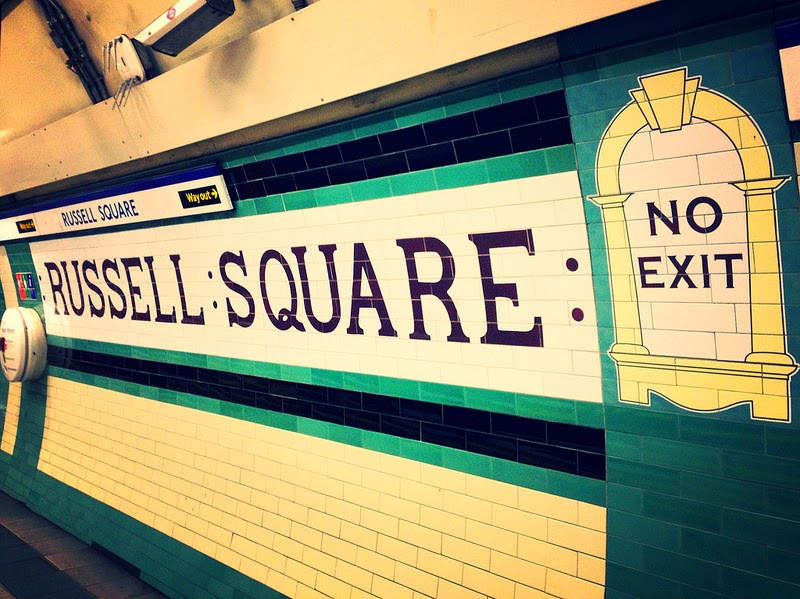
If you were to ask me which was my favourite horror film, it would not be one produced by Hammer.  It bears some of the hallmarks of one of their productions – 1970s technicolour goriness which doesn’t spare the blood.  Christopher Lee is even in it, albeit briefly in a pointless cameo role. I might have at one point assumed that it was one of theirs.  The film that I’m referring to is called ‘Death Line’ (1972).  It stars Donald Pleasance as a rather odd policeman who is investigating a series of mysterious happenings at Russell Square tube station in central London. A high profile man disappears; then a multiple murder is discovered and meanwhile an American student and his girlfriend become embroiled in the case, culminating in her disappearance.  We find out that the culprit is the descendant of some Victorian workers who were trapped in a tunnel collapse and then abandoned to their fate by an unscrupulous construction company. They survived by eating human flesh –their own people at first – but the final remaining descendant is now on the prowl for fresh meat.  Anyone who has ever seen the film will be nodding and smiling at my description– once seen it is never forgotten. This is mainly because the underground creature can only say one phrase of English – “Mind the doors” – and his use of it is both uproariously funny and deeply disturbing.  I’m not sure that it was meant to be so funny; but there are many people who have watched this in a state of intoxication and then spent the rest of the night shouting out the chilling catchphrase while chuckling gleefully.

The premise behind the film is, I suppose, not impossible yet not at all likely. This potentially makes a good horror film – something horrible that could happen but never has happened and never will. That element of potential reality makes the horror more piquant.  Also, its setting in a tube station really adds to this potential reality. Not only does it utilise a setting that is familiar to thousands of commuters, it plays on an iconic imagery which is familiar to millions.  A lot of people love the idea of the London Underground (probably mainly those who don’t have to use it every morning). The red and blue roundels are all over the lucrative tourist industry – I have a keyring and a fridge magnet myself. Mind you, I have those because they tell me to ‘Mind the Gap’ which reminds me of ‘Death Line’ and makes me smile. So part of the draw of the film is seeing how stations looked back in 1972 when they retained more of their original features than they do today. The tiling, the dark and winding corridors and the criss-cross metal doors are atmospheric. Russell Square station (although it was actually the now disused Aldwych that was used for filming) is almost another character in the film.  Best of all, one of the abandoned stations is depicted.  People are fascinated by these sealed up tombs of underground history – books have been written and photographs shared all over the place which pick over the obsolete parts of the network. The mock up of a closed Museum station is eerie in itself, without our cannibal traipsing through it howling in despair.


 At time of writing, it seems that there will also soon be another historical element to the film.  Much of the action takes place after the last tube train has gone through for the night and the station is closing.  Plans are afoot to bring in 24 hour working on the underground.  Perhaps we will soon look back on this wistfully, remembering when we had to run to catch the last train.  Remembering a time when things actually stopped for a bit and people got some rest.


I get the feeling that the writer and director of ‘Death Line’ really knew what they were doing. They produced a horror classic which is low-key enough to make you think that you have really made a discovery when you watch it.  But, I wonder, is Pleasance the star – or is it Russell Square station?


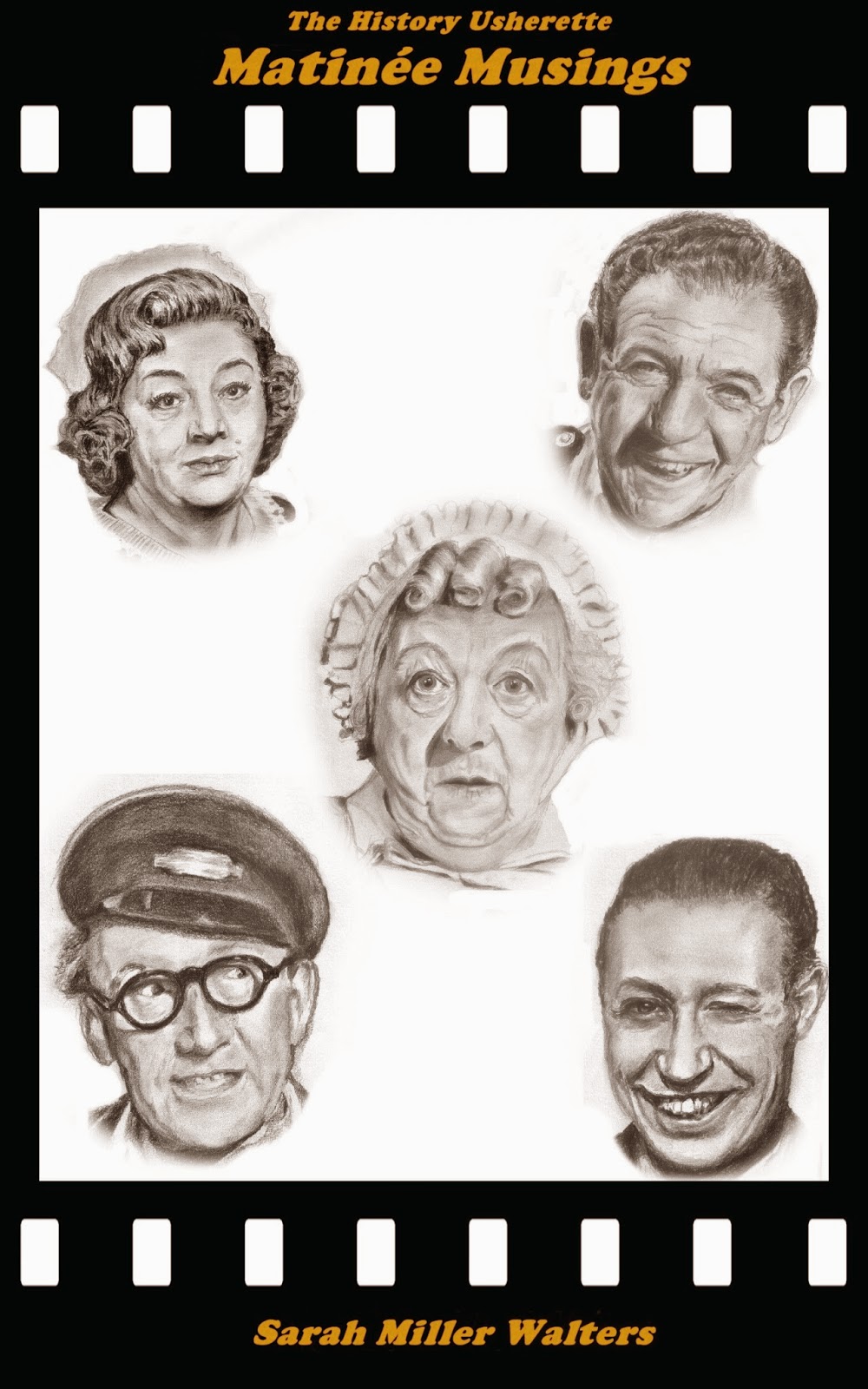
Matinee Musings by the History Usherette

Available as an Amazon Kindle download 77p

Following on from the popular blog The History Usherette, this is a collection of five extended essays on cinematic and historical themes. None of this material has been previously published on the blog. 
1. A Favourite Pastime looks at how the popular British leisure pursuit of gambling on the horses is reflected in British cinema. From George Formby in 'Come on George' to Sid James in 'Carry on at Your Convenience' there was enormous change to be tracked by the filmakers. 
2. Carry on NHS looks the three Carry On films - one from each decade from the 1950s to the 1970s to find out how our perceptions of our favourite bit of the welfare state changed. 
3. Tunnel of Time looks at railways on film from 'Oh! Mr Porter' in the 1930s to 'Carry on Loving' in 1970. 
4. Let George Win It muses on how George Formby shows us how the psychology of the British was affected by World War Two. 
5. Films With Spirit looks at three post-war films and how they reflect our changing attitudes to the spirit world.


Thursday, 6 November 2014

Interlude Four

Now available as an Amazon Kindle download.

Download here.
Blackpool Rock

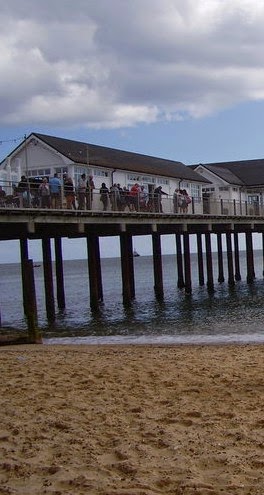
I was a glamour puss when I was young.  I grew up in Blackpool and there were always handsome boys passing through with money in their pockets.  That was all we thought about, all of my teenage summers.  I’d hang around the pier with my friends every Saturday afternoon, eyeing up the new intake of holiday makers, seeking out the boys who didn’t have a girl with them.  I spent days on end sat on the beach in my shorts and bathing costume, rubbing oil onto my legs, trying to look like that Coco Chanel.  I saved up for Woolworths make up and jewellery to finish the look off.  Sometimes I even got bits bought for me if I’d managed to pick up a really generous boy.  It’s amazing what a couple of hours under the pier after dark got you the next day.  Those were the best days.

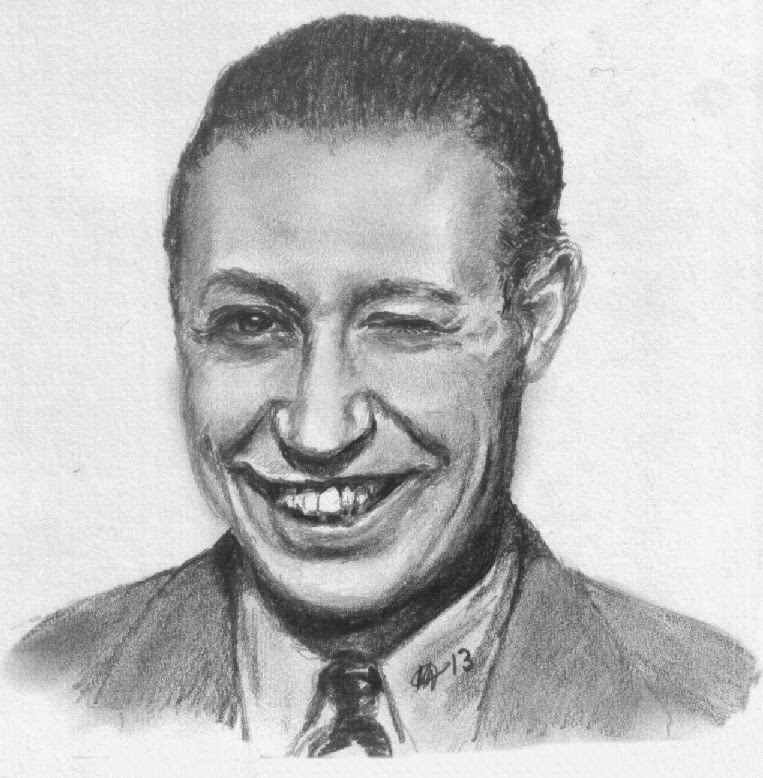
It was while I was inbetween boys that I had my little encounter with fame. All the faces came up for the summer season, you’d see them wandering along the prom sometimes but you hardly ever got near them – they all had their hangers on. George Formby was a regular of course, and he always had his missus with him.  She was a rum ‘un that Beryl Formby.  Nobody ever dared cross her, least of all George himself.  I think she was born before her time, she would have made a good Dynasty type – all shoulder pads and ball breaking or whatever it is.  Joan Collins, you know what I mean.

Well one day I was laid out on a rock at the far end of the beach, just soaking up the last drops of the sun.  I heard somebody shuffle past me and I looked up to see a bloke in a jacket and hat sitting himself down on a boulder nearby.  I could tell by the way that his shoulders were hunched that he was feeling fed up so I called out to him, asking if he was alright.  He turned round and bless me if it wasn’t George himself.  I invited him to come and sit by me and tell me his troubles – and he did!  He was ever so fed up of Beryl, she’d been laying down the law at him and not letting him alone and he’d run away from her.  Just for half an hour, he said, just to show her what was what.  Then we had a bit of a canoodle behind his boulder.  I promised not to tell but I suppose it’s alright now.  They’re both long gone.  He left me a little souvenir but I won’t say what that was.


George by @aitchteee