Friday, 1 December 2017

Fortune Favours - A Short Story

I shined my spotlight on St Trinians in the hope that it would inspire a short story or two to add to my collection. In the end, I came up with just one, inspired by the ideas that I formed about what it might have been to be an innocent young actress in the 1950s.

My new short story, ‘Fortune Favours’, turned out to be rather topical. When the Harvey Weinstein news and all the following revelations broke, I had already completed my first draft. But my story proves not that I have clairvoyant properties, but that it was ever thus. The casting couch and predatory men in power over young girls are as old as cinema itself. We all know this. It only became news again when we discovered that it was as bad as ever when we thought we were more enlightened.  Although, under the surface, I think we all knew that it still went on.

My story hints that my actress character got a small part in a St Trinians film – but this is not based on a real person. Some readers might lift an eyebrow at the innocence that I have portrayed, but that side of her character is based on historical fact. During my reading and researches into the 1950s it became evident that many people went into the prescribed relationship of marriage innocent of the mechanics of reproduction. Sex education as is taught in schools today didn’t exist, and in many families it was just not the done thing to discuss such matters. Jessica Mann, in her excellent book ‘The Fifties Mystique’ (Quartet, 2012), says

“I don’t remember being taught anything about sex at school…many of us understood nothing about sex, nothing about what men and women did in bed.”

The 1950s St Trinians films, which turn the sixth formers into be-stockinged sirens, is an interesting juxtaposition to this. It prompted me to explore it a little after my investigation into what happened to the young actresses who played St Trinians pupils See Spotlight on St Trinians - Girls, Girls

So, I hope you will download my new short story. Click here

Here’s the blurb:

It’s 1957 and Molly Bilsthorpe, a young repertory actress, travels to London. There, she becomes Stella Bishop and wins a place on the books of an agent. This agent, spotting a shapely young innocent, persuades Stella to pose for nude photographs…and to join him for a day out in Brighton. Soon, she moves into his flat and finds herself on film sets and on stages close to, if not actually in, the West End.  When Stella finds that she is in trouble, she turns to a fortune teller that she has been visiting. Help comes in the form of a change in career and a move to Devon…but there are consequences for more people than just Stella.


A 9,000 word story about the innocents and the predators of the 1950s, with a liberal dose of palmistry and tea leaves.

(Thanks to Howard Taylor for sorting out the cover, using a vintage French postcard)

Wednesday, 22 November 2017

Spotlight on St Trinians 18

These are a few of my favourite scenes

I’ve been focussing on the first three St Trinians films – ‘Belles’, ‘Blue Murder’ and ‘Pure Hell’. Basically, it is my opinion that they are the best ones, because they are the ones that feature Joyce Grenfell. I also think that in this series, each subsequent film is not quite as good as the one that went before it. So at the top of the tree we have the 1954 ‘Belles of St Trinians’, the one that I like the most. And if you were to ask me which was my favourite scene in this film, I would have a think, and then probably plump for one single line, delivered by Alastair Sim in the most devastatingly funny way. It happens during the hockey match. Joyce Grenfell’s ‘Creepy Crawley’ character has just been belted over the head with a hockey stick, leaving the match without a referee. The headmistress of the opposing team protests vociferously and then bustles in to take control.  Inevitably, she too ends up on a stretcher. At this point, our Miss Fritton leans into nobody in particular and states “I did warn her.” It always makes me laugh and I wait for that line with a sense of anticipation. Though perhaps it shouldn’t, this violence perpetrated to mature single women who, because of their unmarried status, are fair game as ‘old hags’.


Moving onto ‘Blue Murder at St Trinians’, one of my favourite scenes is a re-occuring one. Near the beginning of the film, the delinquent girls drill a large hole in the floor at the Ministry of Education in the process of securing the school’s victory in a writing competition. After discovery of this hole by the unfortunate ministry staff, workmen are brought in to make repairs. We then regularly see them through the rest of the film – and not once are they doing any work. They are on a perpetual tea break! There’s a bit of business between them and the suited ministry staff in passing each other the sugar that makes me laugh every time. It all goes to prove that the cliché of the English workman sitting by the side of a hole in the road, never doing anything to repair it, is one that has been around for some time now. This attitude to our labouring classes was only going to get worse, culminating in the 1971 film ‘Carry on at Your Convenience’. Today, I think that things have changed because the trade unions don’t have so much influence on our working conditions, yet we haven’t quite shaken off this feeling that the British workman isn’t working quite as hard as he might. Especially when we are sat at temporary traffic lights and there is no sign of any movement…


Finally, ‘Pure Hell of St Trinians’ brings us a Ruby Gates who is finally preparing for her wedding. For her gown, she visits Myrtle’s West End Modes (above the fish shop) – a business I long to patronise. Not for a wedding gown you understand, I see myself being fitted for a twin set to wear at the Cheltenham Literary Festival. But as a favourite scene, this is pipped at the post by Ruby’s well-provisioned lifeboat.  While hiding away on the boat that has been used to carry our unsuspecting St Trinians heroines to their arranged marriages in the Middle East; Ruby has made herself a home beneath the tarpaulin. Not only are some of the items that she has packed rather amusing (a live chicken, a tea service, a recorder, asparagus tips – it’s like The Generation Game) they are also historically interesting. What would the 1950s housewife pack for a desert island? I particularly like to see the old Kelloggs packets.


But don’t just take my word for it. Revisit the films yourself and make your own mind up about the best bits of St Trinians.


Sunday, 5 November 2017

Spotlight on St Trinians 17

The Team of Our Dreams

I recently treated myself to a month’s subscription to the British Newspaper Archive in order to do a bit of research. While I was in there, of course I looked up the St Trinians films to find out what the contemporary press were saying about them.  Much of what I found was cinema listings. Remember when you would look in your local newspaper to find out what was on at the flicks, and what time the show started?  Ah, those were the days, when you didn’t have to take out a bank loan to buy a local newspaper and you would get to see more than the main advertised feature with the supporting shows before it started.

Anyway, I found this little snippet in a Hartlepool newspaper from 1957.


It shows us that the teaming of Joyce Grenfell with Terry-Thomas was a deliberate publicity tactic, inspiring tongue-in-cheek press releases about scorching lovers playing sizzling love scenes. This is all quite pleasing to see, at least the film wasn’t being entirely sold using gymslip hotties, as became increasingly more frequent as the series progressed.


This must have piqued the interest of the public, as Joyce was again paired up with a love interest in the following film. In ‘Pure Hell’ she is wooed by a scheming Cecil Parker – same story, different actor really. Newspaper reviews of ‘Pure Hell’ suggest that Cecil was viewed as slumming it rather with this one, and that even he failed to lift it from mediocrity. Shame! Some things are better in retrospect, including these films. 

Wednesday, 18 October 2017

Spotlight on St Trinians 16

Thorley Walters and the Dual Personality

Thorley Walters appears in both ‘Blue Murder’ and ‘Pure Hell’, but unusually, he plays different roles. Clearly there is meant to be continuity between the films – Flash, Ruby and Sammy all appearing as the same characters in the first three installments. Although there is the classic clanger of Miss Fritton’s change of first name (she is Millicent in ‘Belles’ and Amelia in ‘Blue Murder’).  But for some reason, Thorley was allowed to appear as the army major in ‘Blue Murder’ and then Butters the education department man in ‘Pure Hell.’


The only reason that I can think of for this is that Thorley went down well with Launder and Gilliat, and they thought him well suited to the role of a man in authority who is brought to his knees by delinquent girls. Having carried out some research on Thorley Walters (read my potted biography here) it seems that he was a very easy actor to work with. He was never out of work and this is testament to his talent and his employability. No tantrums, no ego, no scandal (apart from the delightful rumour that he was Cecily Courtneidge’s toyboy) Thorley was simply a grafter. His aptitude for comedy roles shows that he was not afraid to make himself look daft – I bet he was a dream to work with compared with wrangling Alastair Sim and a gang of adolescent girls.

Both of Thorley’s roles are made to look ridiculous by femininity. In ‘Blue Murder’ his army Major enters the school to give the girls a jolly good talking to. He is sent out again dressed in a gym slip. Meanwhile in ‘Pure Hell’ he is turned into a gibbering wreck by the Shakespeare striptease and turns to a few effeminate dance moves to calm his ragged nerves. The clear message is that girls who do not behave are emasculating and if a man lets them win then he degrades himself by becoming feminine too. So you’d best keep your girls under control. The same could be said of Lionel Jeffries’ role in ‘Blue Murder’ – he has to pose as a headmistress because the St Trinians mob have him over a barrel – if he doesn’t do as they say then he will be turned over to the police as a jewel thief. By being check-mated by the girls, he too becomes feminine and finds it degrading.


Earlier posts in this blog series laud Launder and Gilliat for being feminist film makers, but here’s where they let themselves down. Being like a woman isn’t that demeaning, is it chaps? After all we’d been though in the war?  In the 1950s it was time to put us in our place again…have we recovered yet?

Sunday, 1 October 2017

Spotlight on St Trinians 15

The History of Superintendent Sammy Kemp Bird

Joyce Grenfell’s Policewoman Ruby Gates is one of the undisputed stars of the first three St Trinians films, but she would be nothing without her Sammy.  We learn in ‘Blue Murder’ that the policing pair have been engaged for 14 years, but despite Ruby’s desperate entreaties her Sammy refuses to make an honest woman of the poor old girl. This backstory really adds meat to Joyce’s role. Everything she does, she does for Sammy but her envisaged future happiness is continually thwarted. To some extent we can sympathise with him, obviously he has dug himself into a hole that he doesn’t know how to get out of. And you can see how Ruby might be hard work. But still, he’s a big old coward and a rotter for leading her on for so long.  Let’s find out some more about the actor behind the old stinker.


Lloyd Lamble was born in Melbourne, Australia in 1914, which explains the very slight accent behind the otherwise standard 1950s diction. Listen carefully, you can hear it. Lloyd came from a musical family – his father was secretary of the Musicians’ Union of Australia. Lloyd went straight into entertainment as soon as he was old enough, and he worked as a radio announcer and as an actor. He also opened his own acting school. His first film acting credit according to IMDB is in an Australian film ‘The Farrer Story’ from 1949.


Lloyd left Australia when the work dried up in the early 1950s – and by this point he had also been married three times! Perhaps he didn’t need to dig too deep to find a man trapped in a relationship that he didn’t want anymore…His first British film was called ‘Island of Desire’ and this was released in 1952. It also featured other soon-to-be household name Peter Butterworth. By the time that ‘Belles’ was released just two years later, he had appeared in 16 previous films. He obviously had something that British film-makers wanted. This was probably his voice. It had always been considered solid and reliable and it had been used by the Australian Government during WW2 to deliver propaganda messages. I recently watched a film called ‘No Trees in the Street’ and up popped Lloyd – as a policeman of course – being calm and strong in a crisis. A typical British attribute that we liked to see back in the 50s.


 Lloyd appeared at the Edinburgh fringe in the 1970s and acted in the West End. His career continued on into the 1980s – according to IMDB his final role was in soap opera ‘Howard’s Way’ in 1985. But he lived on to the staggering age of 94, dying in 2008. There was certainly more to him than a mean old Barsetshire Superintendent!

Monday, 11 September 2017

Spotlight on St Trinians 14

Girls, Girls

I have written about some of the stars of the St Trinians films, but of course they would be nothing without the delinquent schoolgirls. Some of the young girls did go on to become stars, including in the Carry On films. ‘Blue Murder’ features both Dilys Laye and Rosalind Knight as sixth formers. Dilys went on to feature in four Carry On films among many others; while Rosalind was in Carry on Teacher and Nurse. Rosalind (the daughter of Powell and Pressburger actor Esmond Knight) also had a distinguished theatre career and seems to have rarely been out of work. Back in the 1990s, I blush to say that I never realised that it was Rosalind playing landlady Beryl in the sitcom ‘Gimme Gimme Gimme’. A huge “penny drop” moment when I found this out years later. Barbara Windsor also had an uncredited role as a St Trinians pupil before her career took off.


I went on the ever-helpful IMDB website, and I looked at all of the schoolgirls credited in ‘Belles’ and ‘Blue Murder’.  By clicking onto their names, you can then get to see a page dedicated to that particular actress. This lists all of their film and television roles. This made for an interesting bit of analysis. Of 22 young actresses credited with a St Trinians pupil role:

·        7 had careers that stretched out towards the end of the 20th century, or had further roles that increased their level of fame. These girls include Dilys and Rosalind, as well as Patricia Lawrence and Vivienne Martin, who both had busy television careers well into the 1990s. I also include Sabrina in this list, who was more of a glamour girl than an actress.
·        7 appear not have pursued an acting career at all. There are four who have a St Trinian’s film as their only credit, while the others only appeared in a couple of other films while they were still children. I would guess that these were ‘extra pocket money’ actresses rather than people with a strong attraction to the profession.
·        8 took their acting careers a little bit further, only for them to end later on. I have identified at least 4 who carried on until the 1960s. This will have been the decade when they hit their 30s. The explanation that I would guess at is that they chose marriage and children over career. One sad exception is Belinda Lee, who had a busy and promising career until she was killed in a road accident in the US in 1961. She was just 25 years old.


The rest however serve to illustrate contemporary society and an emphasis that can be seen in the films themselves.  In the St Trinians films there are two sets of girls: the young delinquents with plaits and a wild look in their eye; and the sixth form sirens.  They are eligible to join Flash Harry’s marriage bureau, where the aim is to snare a rich husband and take him for every penny. A demonstration of the narrow opportunities seemingly available to women then, that this should be their best chance of becoming rich and powerful.  Girls had to expect marriage and children to take precedence over any other opportunity. And so, I presume that when the retiring actresses left their profession, it was pressure of society that won out over personal ambition.


Those St Trinians girls were not quite so progressive as they seem.


Thursday, 7 September 2017

Intermission

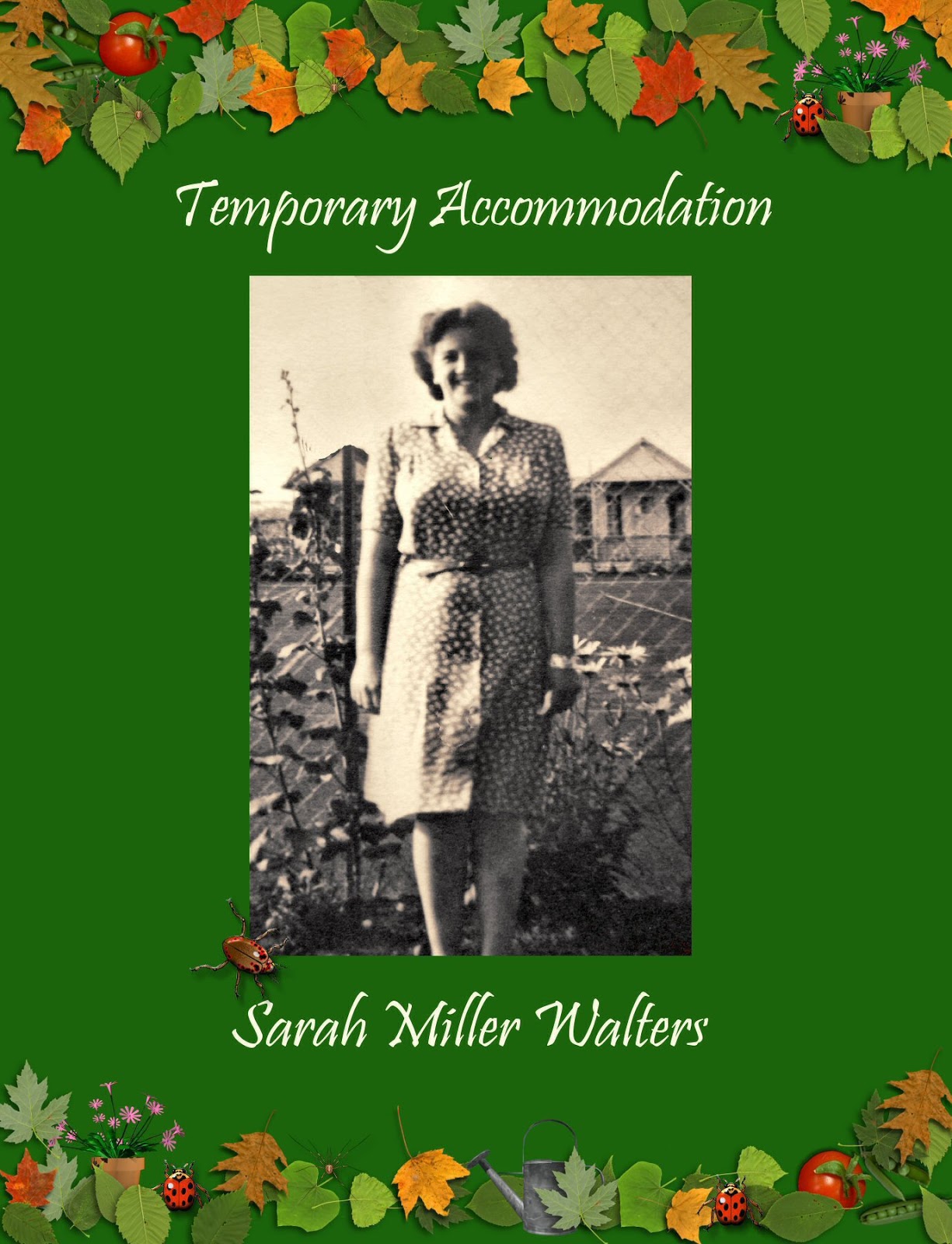
My new novella is now available as a Kindle download and a paperback. It’s called ‘Temporary Accommodation’. Here’s the blurb:


It is the late 1940s and Old Vic Theatre trained actress Marigold Walbrook is languishing in a suburban repertory theatre. Having lost her home and parents in a V2 attack, her landlady is the nearest she has to a family. When Marigold's half-forgotten and reclusive Great Aunt dies, she inherits Donkey End Cottage in the Hampshire town of Bishop's Wallop. Deciding to abandon her acting career, she takes up residence in the cottage, planning to become a playwright.

Marigold finds that the residents of Bishop's Wallop are preoccupied with a new development of prefab houses that are being built in a field near to Marigold's cottage. They are intended to house bombed-out families from Portsmouth. Locals are worried that this influx will spoil their little town and their quiet rural lives. Knowing what it is to be homeless, Marigold determines to do something to bring together the old and new residents. As it looks increasingly likely that gardening will take over her life, she decides to launch a gardening competition, with prizes to be awarded by an old acting friend at a summer garden party. The competition meets many obstacles along the way, including the might of the local Women's Institute. But with a small group of new friends and her old landlady, she digs deep to build a community.

This novella will appeal to those interested in post war life in Britain. With reference to films, acting stars, prefabs and rationing (and a cameo appearance from Thorley Walters) it evokes a different and difficult time in our history with humour and warmth.


Twitter: @agathadascoyne
Instagram: @Adventureswithword